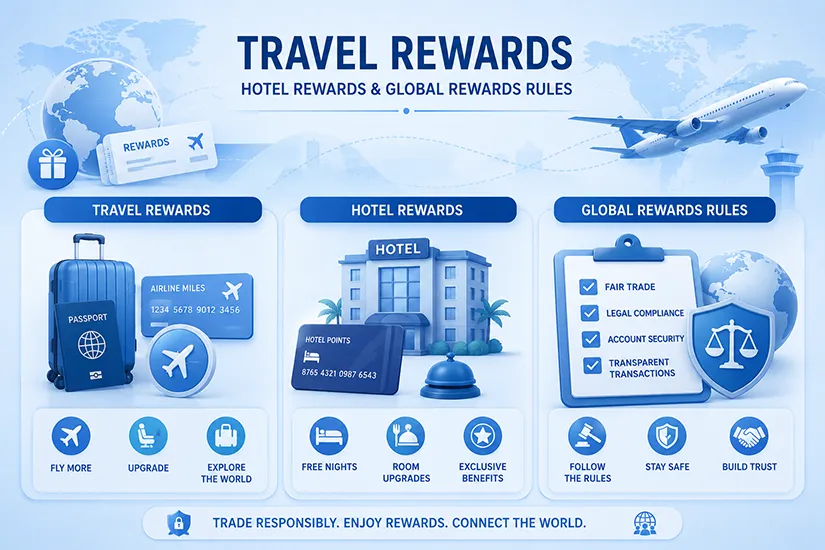
The Evolving Dynamics Of Global Loyalty Program Rules
Navigating Travel and Hotel Rewards: The Evolving Dynamics of Global Loyalty Program Rules
The global travel industry has undergone a massive transformation over recent years, driven largely by the proliferation and evolution of airline and hotel loyalty programs. What once began as simple frequent flyer initiatives designed to reward brand affinity has morphed into a multi-billion-dollar ecosystem of points, miles, and elite status tiers. Today, travel rewards represent a primary currency for millions of global consumers, business travelers, and credit card holders seeking to extract maximum value from their travel budgets. However, as the economic value of these rewards has grown, so too has the complexity of the global trading, transfer, and redemption rules that govern them.
Understanding the modern travel rewards ecosystem requires a thorough grasp of how major airlines, hotel chains, and credit card issuers manage their loyalty inventories. Programs such as Marriott Bonvoy, Hilton Honors, World of Hyatt, British Airways Avios, and American Airlines AAdvantage are no longer just marketing perks; they are sophisticated financial instruments. For consumers, accumulating points offers unparalleled opportunities for luxury hotel stays and premium cabin flights. Yet, navigating the regulatory frameworks, redemption devaluation trends, and legal boundaries surrounding reward transfers remains essential for any travel enthusiast or digital asset holder.
The Architecture of Modern Travel and Hotel Rewards
At its core, the value proposition of travel rewards lies in leverage. While direct cash purchases for luxury accommodations or long-haul business class flights can cost thousands of dollars, redeeming strategic reward points significantly reduces out-of-pocket expenses. Hotel loyalty programs, in particular, have introduced flexible redemption structures, dynamic point pricing, and elite status benefits that include complimentary room upgrades, late check-outs, and free breakfast amenities.
Simultaneously, the convergence of banking and travel has accelerated point accumulation. Modern consumers rarely earn the majority of their miles in the air or hotel rooms; instead, flexible credit card rewards systems—such as Chase Ultimate Rewards, American Express Membership Rewards, and Capital One Venture Miles—allow cardholders to transfer points directly to dozens of partner airlines and hotel chains at 1:1 ratios. This interconnectivity has created a fluid global marketplace where reward points can be strategically moved across international boundaries to book high-value redemptions.
However, this rapid growth has led program operators to tighten their dynamic pricing algorithms. Most major hotel chains have phased out traditional fixed award charts in favor of dynamic pricing models, where the point cost of a room fluctuates according to real-time cash rates and seasonal demand. As a result, travel rewards enthusiasts must stay informed on program shifts to ensure their points maintain peak purchasing power.
Global Trading Rules and Regulatory Frameworks
As the perceived monetary value of loyalty points has surged, a secondary market for buying, selling, and trading travel rewards has naturally emerged. However, operating within this space requires navigating a strict web of legal distinctions and contractual terms of service enforced by global travel brands.
1. Contractual Terms vs. Legal Regulations
From a legal standpoint in almost all international jurisdictions, loyalty points and airline miles are considered intangible digital assets, and selling them is not a statutory criminal offense. However, virtually every major airline and hotel chain explicitly prohibits the commercial resale, auctioning, or barter of their rewards within their contractual Terms of Service (ToS). Loyalty programs maintain that points remain the proprietary property of the program provider, granted to the member under specific usage conditions.
2. Authorized Gifting and Official Transfers
While commercial selling is restricted by program terms, official gifting and point pooling are widely supported when executed through legitimate channels. Most major hotel chains, including Marriott, Hilton, and Hyatt, allow members to transfer points to family members or friends, often with annual transfer limits. Furthermore, program features like airline "family pooling" permit household members to consolidate points into a single balance for shared redemptions without violating program rules.
3. Security Enforcement and Fraud Audits
Loyalty program risk-management teams utilize sophisticated machine learning algorithms to detect unauthorized commercial redemptions or suspicious account activities. If an account is flagged for violating program terms—such as booking award stays for third parties in exchange for monetary payment on unverified public forums—consequences can be severe. Operators may initiate account security freezes, audit point origins, cancel active award reservations, or permanently revoke elite membership status.
Best Practices for Safe Rewards Management and Redemption
To maximize the utility of travel and hotel rewards while protecting account integrity, travelers should adhere to several established industry best practices:
- Utilize Official Transfer Partners: Always transfer points directly through official banking portals or program transfer tools rather than relying on unverified third-party brokers or peer-to-peer messaging forums.
- Diversify Flexible Point Balances: Avoid hoarding large point balances within a single hotel or airline program for extended periods. Keeping rewards in flexible credit card currencies protects your value against sudden program devaluations until you are ready to book.
- Practice Strict Credential Hygiene: Protect your loyalty accounts with strong, unique passwords and enable Multi-Factor Authentication (2FA). Loyalty accounts have become prime targets for unauthorized access due to their high monetary value.
- Understand Third-Party Booking Rules: When booking hotel award stays for family or friends, always utilize official "Gifting an Award" procedures provided by the hotel loyalty program to ensure seamless check-in experiences without risking reservation cancellations.
Summary Overview of Rewards Trading and Usage
Official Point Transfers & Gifting
- Permitted Standard: Directly through official program management portals using authorized family pooling or gifting features.
- Risk to Avoid: Publicly advertising points for cash sale on unvetted social media groups or classified ads.
Redemption Strategy
- Permitted Standard: Booking flexible award stays during shoulder seasons and leveraging 1:1 bank transfer bonuses.
- Risk to Avoid: Holding large point balances long-term during dynamic pricing shifts and program devaluations.
Account Security Protocols
- Permitted Standard: Enabling 2FA authentication and managing accounts via official mobile apps.
- Risk to Avoid: Sharing primary login credentials or verification codes with third-party unauthorized software.
By understanding the mechanics of modern loyalty programs, staying updated on global trading rules, and following secure redemption practices, travelers can effectively leverage travel and hotel rewards to unlock premium global travel experiences safely and efficiently.
Free Delivery
Free shipping digital product
Free Return
Money back guarantee!
27/4 Support
We support online 24 hours a day