Global Economic Overview And Flight Booking Strategies
Navigating Global Economic Turbulence: Insider Hacks to Score Cheap Flights in a Tight Economy
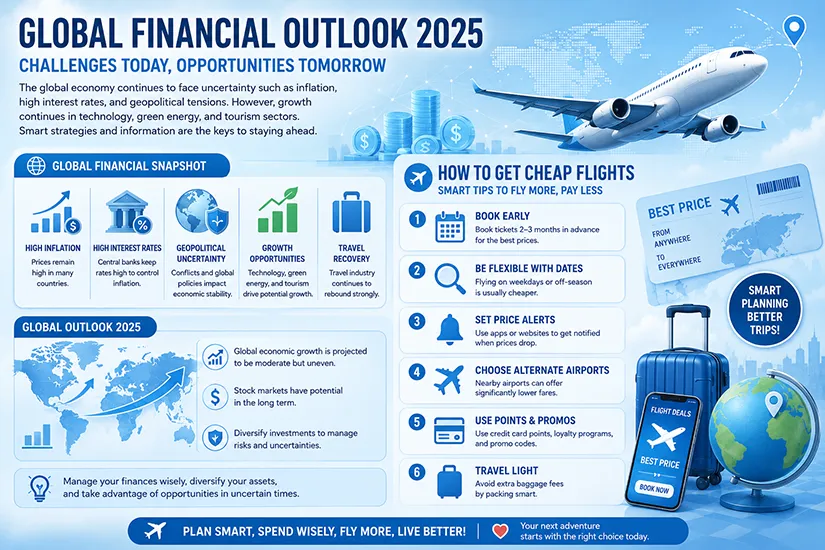
The contemporary global economy presents a complex and volatile backdrop for international travelers and industry analysts alike. Over the past few years, the macroeconomic landscape has been defined by persistent inflation, shifting central bank interest policies, currency fluctuations, and elevated fuel costs. These combined financial pressures have reshaped consumer spending power around the world. Surprisingly, despite these economic headwinds, global demand for air travel has shown remarkable resilience. Households continue to prioritize experiential travel over tangible consumer goods, keeping aircraft load factors at near-record levels.
However, behind the scenes, the fundamental economics of the aviation industry have shifted dramatically. Air carriers face mounting operational expenditures, ranging from global supply chain bottlenecks and rising maintenance fees to labor adjustments and volatile jet fuel prices. Rather than imposing simple, across-the-board fare hikes that might scare off cost-conscious leisure travelers, major airlines have refined sophisticated revenue management systems. Modern carriers rely heavily on continuous dynamic pricing algorithms, expanding premium economy cabins, and unbundling traditional ticket privileges into a-la-carte fees. Consequently, while advertised base fares on certain international routes may appear stable, the total cost of flying can escalate rapidly for unprepared consumers. Understanding these economic mechanics is the critical first step toward securing affordable flights in today's financial climate.
Strategic Hacks to Score Cheap Flights
To overcome these structural cost barriers, travelers must modernize their booking strategies. The single most effective tactic is mastering complete flexibility with travel dates and destinations. In an era governed by real-time dynamic pricing, rigid travel schedules are the primary driver of inflated ticket costs. Airline algorithms automatically inflate prices on high-demand calendar slots, such as Friday afternoon departures or Sunday evening returns.
By adopting a flexible window of plus-or-minus three days, travelers routinely discover base fare reductions between 20% and 50%. Mid-week departures, specifically on Tuesdays and Wednesdays, consistently offer lower passenger demand and significantly lower rates. Furthermore, using broad search features such as Google Flights "Explore" or Skyscanner's "Whole Month" view allows travelers to pick destinations based on real-time bargains rather than fixed itineraries. Additionally, booking trips during the "shoulder season"—the sweet spot between peak holiday rushes and quiet off-peak months—guarantees lower fares along with less crowded destinations.
Another crucial strategy involves setting up automated price tracking and understanding realistic booking windows. A persistent travel myth suggests that purchasing tickets on a specific day of the week, such as midnight on Tuesday, guarantees the lowest price. In reality, airline algorithms adjust ticket prices hundreds of times daily based on real-time seat inventory, competitor pricing, and search volume.
Rather than searching manually every day, enable automated price alerts across multiple search engines several months before your intended travel date. For domestic itineraries, the ideal booking window generally ranges between 3 to 8 weeks prior to departure. For international long-haul flights, monitor prices 3 to 6 months in advance. Tracking a route over time establishes a reliable baseline price, enabling you to act instantly when a carrier drops fares to fill remaining seats.
Rethinking Routes and Unbundled Fares
Exploring secondary hubs, alternative airports, and customized multi-city routing offers another powerful avenue for savings. Direct flights between major international capitals often carry a steep convenience tax. Metropolitan areas frequently host secondary or regional airports with significantly lower carrier landing fees and reduced taxes. For instance, opting to fly into regional hubs near primary destinations can yield substantial overall savings.
Savvy travelers can also construct self-transfer itineraries by pairing two distinct low-cost carriers on separate tickets. When using this strategy, always leave a buffer of at least 3 to 4 hours between flights to account for potential delays, baggage re-checking, or terminal transfers.
Understanding the true cost of "unbundled" basic economy fares is equally critical. Both low-cost carriers and full-service legacy airlines now aggressively promote basic economy options. While these lower headline prices look appealing on search aggregators, hidden ancillary fees for carry-on baggage, checked luggage, seat selection, and priority boarding can quickly eliminate initial discounts.
Before finalizing any transaction, calculate the true all-in cost by adding all mandatory extra fees to the base price. In many cases, a full-service carrier's standard economy fare—which includes carry-on bags and seat selection—ends up cheaper than a budget carrier's basic option once all add-ons are included. Traveling light with a single overhead carry-on or personal item remains one of the simplest ways to bypass ancillary fee inflation entirely.
Leveraging Foreign Exchange and Error Fares
Finally, travelers can take advantage of currency arbitrage and regional pricing anomalies. Because airlines price tickets in local currencies based on regional purchasing power, foreign exchange fluctuations create unique buying opportunities. By changing the point of sale, country region, or currency on an airline's official website—or using a virtual private network (VPN)—travelers can occasionally access lower ticket prices denominated in local currencies undergoing devaluation. Always complete these purchases using a credit card that waives foreign currency transaction fees.
Additionally, human input errors or system conversion glitches sometimes result in temporary "mistake fares," where long-haul tickets are listed at a fraction of their standard cost. Subscribing to specialized flight-deal newsletters and mistake-fare alert platforms allows you to jump on these rare opportunities before airlines spot and correct the pricing glitch.
In summary, while global financial turbulence and shifting airline economics have made travel more expensive on paper, consumer control over flight costs remains strong. By abandoning rigid travel patterns, monitoring dynamic pricing trends, analyzing all-in fare structures, and exploiting alternative routing, cost-conscious travelers can successfully navigate global economic challenges and continue exploring the world on a budget.
Free Delivery
Free shipping digital product
Free Return
Money back guarantee!
27/4 Support
We support online 24 hours a day